
Tissue and cell access
The delivery system must reach the relevant tissue and interact with the intended cell population.
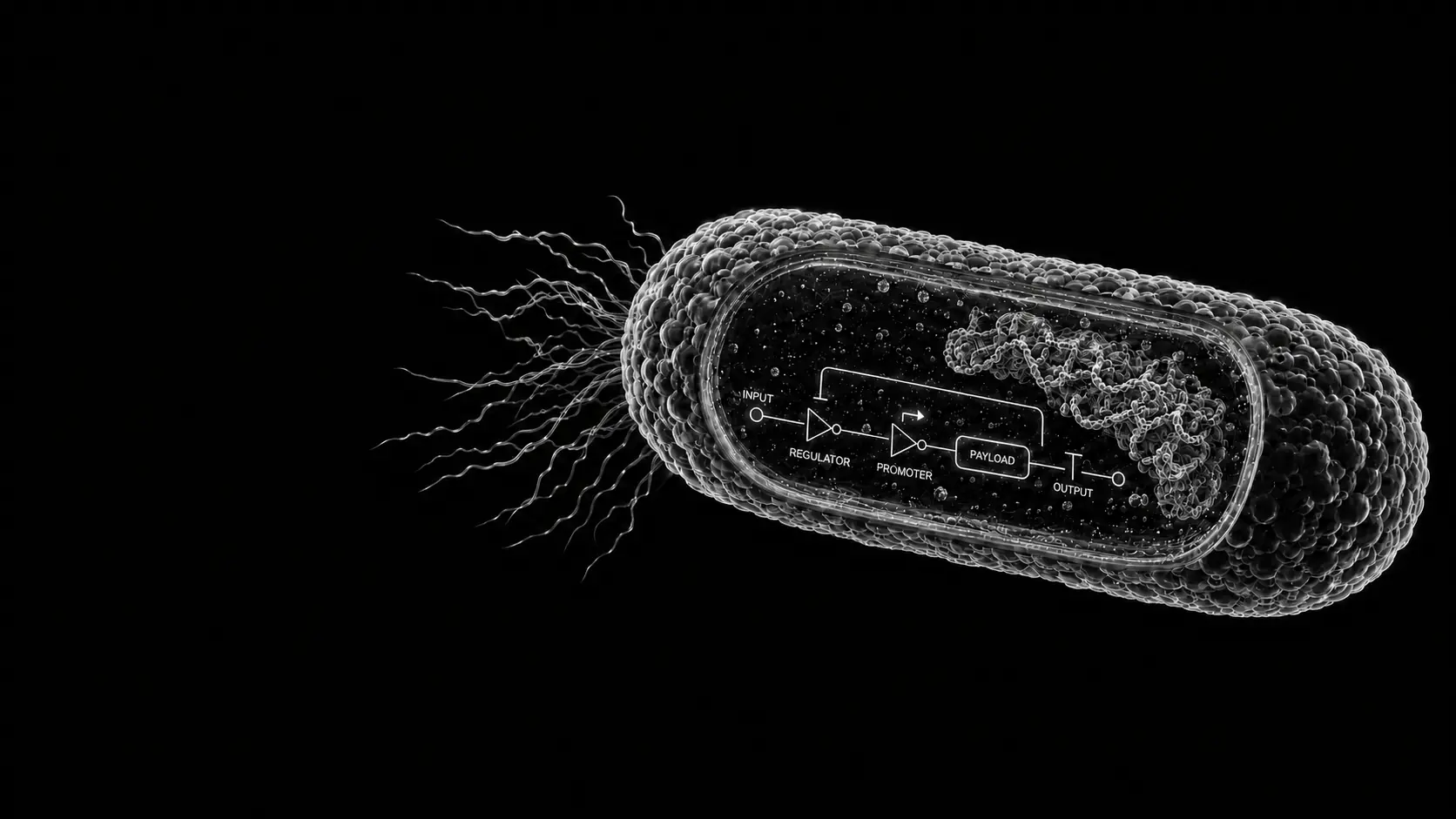
BactPac™
BactPac is SiVEC’s engineered bacterial delivery architecture. It is designed to bind selected cells, enter them, remain contained, produce its therapeutic payload, lyse completely, and release functional cargo intracellularly. Cell-envelope and containment engineering are incorporated to reduce innate immune activation and support controlled administration.
The intracellular delivery problem
Many biologic payloads are limited not only by what they do, but by whether they can reach the tissue, cell, and intracellular location required for activity. BactPac has been developed to coordinate those delivery functions within a single engineered product architecture.
The delivery system must reach the relevant tissue and interact with the intended cell population.
The payload must cross the cell membrane without losing the properties required for therapeutic activity.
Cargo must become available in the correct cellular location, remain functional, and persist long enough to produce a biological effect.
How BactPac works
Each BactPac program coordinates three delivery functions that determine where and when a therapeutic payload becomes available: engagement with selected cells, cellular entry, and intracellular release.
Engineered surface features support interaction with selected cells.
BactPac enters the cell, remains contained, and then lyses intracellularly.
Complete lysis releases therapeutic cargo inside the cell.
Platform definition
BactPac produces the therapeutic payload and directs its targeted intracellular delivery. Delivery functions such as binding, cellular entry, intracellular persistence, and programmed lysis determine where and when the payload is released.
Within the same system, the payload is engineered for expression, localization, stability, and therapeutic activity. This modular architecture allows delivery and payload performance to be optimized independently while operating together in one platform.
Cargo flexibility
shRNA for RNA interference
Linear and circular mRNA
CRISPR/Cas ribonucleoprotein systems
Proteins, including single-domain antibodies
Compatibility and performance depend on payload design, expression, localization, stability, and biological context.
Demonstrated platform outcomes
Preclinical data demonstrate successful delivery and biological activity across multiple payload classes and routes of administration. Individual therapeutic candidates are subsequently evaluated in disease-specific models to establish efficacy and optimize their final configuration.
Review supporting science →Successful preclinical delivery
Functional intracellular delivery demonstrated.
Successful preclinical delivery
mRNA and regulatory RNA payloads evaluated across programs.
Successful in vitro proof of concept
Functional editing components produced and shown to be active in vitro.
Successful preclinical evaluation
Systemic delivery demonstrated in the lead oncology program.
Successful preclinical evaluation
Respiratory delivery demonstrated in the influenza program.
Safety
BactPac incorporates cell-envelope engineering designed to reduce innate immune sensing and pro-inflammatory signaling relative to unmodified bacteria.
BactPac is designed not to proliferate in mammalian tissues. Following payload delivery and programmed lysis, residual material can be cleared rather than establishing persistent colonization.
BactPac is designed to limit systemic persistence and hepatic exposure, reducing the potential for liver-associated toxicity.
Manufacturing
BactPac produces its cargo during manufacturing, eliminating the need for expensive synthesis and packaging.
BactPac is produced using standard bacterial fermentation processes that have been used in industry for decades.
Internal cost modeling projects substantially lower manufacturing costs relative to conventional biologic delivery approaches.
BactPac in motion
A two-minute look at how BactPac combines payload production, targeted cell entry, and intracellular cargo release in one engineered system.
Delivery technologies in context
BactPac combines broad payload compatibility, targeted intracellular delivery, repeat-dosing potential, and non-integrating activity in one engineered platform. The comparison below highlights key distinctions among established delivery technologies.